Tuesday, July 12, 2016

David Cameron Humming


David Cameron Humming a tune after announcing Theresa May as new PM


It's a bit more sinister than it first appears:  


Wednesday, June 15, 2016

Sunday, June 5, 2016

What is the legal precedent for government authorized murder?

We must have a number of lawyers and legal experts who sporadically participate on this blog. I know President Obama and his administration have petitioned for and, apparently, been granted the power to kill U.S. or other citizens and not be prosecuted for such crimes actions. How did these powers come about? Do other countries legalize government murder? Do any other self-stated democracies participate in killing by executive order? What precedent allows our justice department to silently authorize these killings?

Yes, I freely admit that politically (and rationally) I am against this policy as a very undemocratic thing to do, but I wonder how a so-called democracy arrives in this position. I understand how the fear arrives to allow such a situation, but how does the law allow it?

Saturday, May 21, 2016

Theories of Atonement III

Classical or Patristic Theory – Part 2

In the next two posts I’m going to focus on two theologians of the modern era who have intensively mined the writings of early Christian scholars to try to uncover the basic Patristic view of atonement.  The first of these two thinkers is Gustaf Aulén, a Swedish theologian and a bishop in the Church of Sweden who wrote in the mid-20th century.  The second is Benjamin Myers, an Australian theologian currently teaching at Charles Sturt University's School of Theology in Sydney, Australia.  

In his groundbreaking book, Christus Victor (Christ the Victor), published in 1931, Aulén took a fresh look at the early Church fathers’ conception of atonement.  His book shook things up a bit in the theological community and generated renewed interest in the Patristic writers.  (FYI:  We speak of the Church fathers and the Patristic period, but there were Church mothers as well – ecclesiastical scholars in the early church who were women.  Among them were Macrina the Younger (330 – 379) and Proba Betitia Faltonia (310 – 360)).  


Before Aulén, theologians in the West mostly took a dim view of the ancient Christian theory of atonement, branding it the “ransom theory.”  Relying mostly on the second century writings of Origen of Alexandria (c.184 – c.254), these theologians saw the Patristic thinking this way:  by Adam and Eve’s disobedience and turning away from God, Satan was able to obtain ownership of the human race.   God made a deal with Satan to buy back humanity.   His own son’s death was the payment.  Satan, however, mistakenly believed that he had the power to hold Christ.   Instead, Christ overcame Satan and was resurrected on the third day as the devil helplessly looked on.  Said Origen, “[H]e (the Evil One) had been deceived, and led to suppose that he was capable of mastering that [Jesus’] soul, and he did not see that to hold Him involved a trial of strength greater than he was equal to.”  Origen, Commentary on Matthew.  Irenaeus (c.130-c.202) and Clement of Alexandria (c.150 – c.215) similarly described Jesus’ death as a ransom payment.

This approach had the advantage of some scriptural support. The Bible repeatedly uses the term “ransom” in connection with God’s saving act.  See Mark 10:45 ("For even the Son of Man did not come to be served, but to serve, and to give his life as a ransom for many"); 1 Timothy 2:5-6 ("For there is one God and one mediator between God and men, the man Christ Jesus, who gave himself as a ransom for all men—the testimony given in its proper time"); 1 Corinthians 6:20 (“A great price was paid to ransom you”).

Nevertheless, the idea that salvation was achieved by a bargain between God and Satan has been heavily criticized and was generally dismissed as untenable.  It makes God look bad in two different ways.  First, it has God making deals with Satan almost as an equal.  Second, God then deceives Satan into thinking that the Son was someone that Satan could actually possess.  Satan honors his end of the bargain but God does not.  Accordingly, for centuries Church thinkers in Western Europe and the New World tended to ignore the Patristic writing on atonement. 

Aulén, however, stepped forward in the 20th century and claimed that this picture was both incomplete and a mischaracterization the view of the early church – even of Origen.  Aulén said that the better way of seeing the ancient Christian idea of redemption was not as a deal between God and Satan but as God’s confrontation of evil and the conquest of sin and death.  As the title of Aulén’s work suggests, Christ is not the ransom paid to Satan but he is a warrior who battles and defeats the forces of evil.  Aulén explains that the use of the word “ransom” should not be understood as part of a bargain, but as the price or cost to Christ for his rescue and liberation of humanity from Satan’s imprisonment.  

Aulén also emphasizes that the classical “theory” of atonement was not really a rational theory or doctrine, but a theme with variations:

[T]he classic idea of the Atonement has never been put forward … as a rounded and finished theological doctrine; it has always been an idea, a motif, a theme, expressed in many different variations. It is not, indeed, that it has lacked clearness of outline; on the contrary, it has been fully definite and unambiguous. But it has never been shaped into a rational theory. (Emphasis in original)

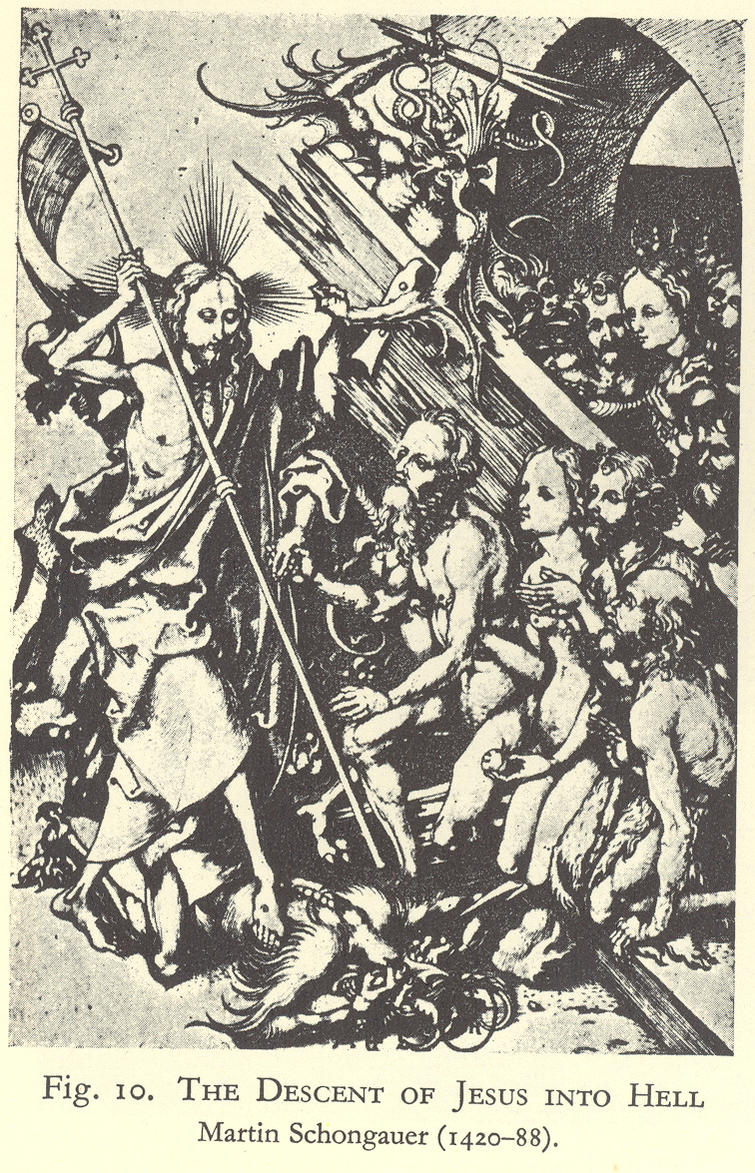
As Aulén points out, there is still a basic storyline.  Satan held humanity captive, made possible by Adam and Eve’s original sin.  In order to gain entry into the devil’s kingdom and free humankind, God became man in the incarnation.  Satan did not recognize God in Jesus but saw him as an extraordinarily righteous man and, for this reason, desperately wanted his soul, if just to silence him.  Satan first tried to tempt Jesus in the desert but was not successful.  Then he turned to Judas and lured him into betraying Jesus and bringing about his execution.  Once Jesus was crucified and had died, he gained entrance to Satan’s realm in the underworld.  And then, like the Greek Trojan horse, Christ revealed his true nature, laid waste to Satan’s kingdom, freed the souls’ imprisoned there and destroyed death.  Christ gathered up those who had been imprisoned in hell and led them out of the netherworld to paradise.  His work done, on the third day, Christ was resurrected and ascended to the Father. 

Irenaeus of Lyons (130 – 202) writing in the second century, explains it this way:

For if man, who had been created by God that he might live, after losing life, through being injured by the serpent that had corrupted him, should not any more return to life, but should be utterly [and forever] abandoned to death, God would [in that case] have been conquered, and the wickedness of the serpent would have prevailed over the will of God. But inasmuch as God is invincible and long-suffering, He did indeed show Himself to be long-suffering in the matter of the correction of man and the probation of all, as I have already observed; and by means of the second man [Christ] did He bind the strong man [Satan], and spoiled his goods, and abolished death, vivifying that man who had been in a state of death. …  [W]herefore he who had led man captive, was justly captured in his turn by God; but man, who had been led captive, was loosed from the bonds of condemnation.  (Irenaeus of Lyons, Against the Heresies).

This version of salvation also has Biblical support.  In the Gospel of John, at the last supper Jesus tells his disciples, “Now is the judgment of this world; now will the ruler of this world be cast out.”  John 12:31.  In his first letter, John says, “The reason the Son of God appeared was to destroy the works of the devil.” 1 John 3:8.  Paul says in Colossians that Jesus “disarmed the rulers and authorities and put them to open shame, by triumphing over them in him.”  Colossians 2:15.   And in Paul’s letter to the Hebrews, he says, “Since therefore the children share in flesh and blood, he himself likewise partook of the same things, that through death he might destroy the one who has the power of death, that is, the devil.”  Hebrews 2:14.

The early Christian writers often spoke about God’s saving act with striking, and occasionally borderline crude language.  Gregory of Nyssa (c. 335 – c. 395) in the fourth century, for example, used the image of bait hung on a fishhook to describe the incarnation:

Hence it was that God, in order to make himself easily accessible to him who sought the ransom for us [the devil], veiled himself in our nature. In that way, as it is with greedy fish, he might swallow the Godhead like a fishhook along with the flesh, which was the bait.  (Gregory of Nyssa, The Great Catechism.)  

Then, in the fifth century, St. Augustine of Hippo (354 – 430), the well-known Latin writer, similarly describes God’s action as a deception, using his well-know image of the mousetrap:  

The devil jumped for joy when Christ died; and by the very death of Christ the devil was overcome: he took, as it were, the bait in the mousetrap.  He rejoiced at the death, thinking himself death’s commander. But that which caused his joy dangled the bait before him. The Lord’s cross was the devil’s mousetrap: the bait which caught him was the death of the Lord.  (St. Augustine, Sermons)

Yes, there is still some deception on God’s part in this revised theory.  Gregory of Nyssa, for example, concedes that God’s use of Christ’s human flesh as bait may not have been the most honorable thing to do:  “For that not by pure Deity alone, but by Deity veiled in human nature, God, without the knowledge of His enemy, got within the lines of him who had man in his power, is in some measure a fraud and a surprise….”  (Gregory of Nyssa, The Great Catechism)  Gregory nevertheless justifies the deception because it was used “for the salvation of him who had perished, and thus not only conferred benefit on the lost one [Man], but on him, too, who had wrought our ruin [Satan].”  (Ibid.)  Indeed, Gregory says that the devil has no cause for complaint, for he was deceived for his own good:  

[E]ven the adversary himself will not be likely to dispute that what took place was both just and salutary, that is, if he shall have attained to a perception of the benefit. 

For it is now as with those who for their cure are subjected to the knife and the cautery; they are angry with the doctors, and wince with the pain of the incision; but if recovery of health be the result of this treatment, and the pain of the cautery passes away, they will feel grateful to those who have wrought this cure upon them.  (Ibid.)

This passage suggests a recurring and intriguing theme in the Patristic writings that must, unfortunately, await exploration for another day – that Christ not only brought universal salvation to all humankind but also restored Satan himself.

We also frequently find among the writings of the Church fathers vivid portrayals of Christ’s military victory over Satan and his dramatic rescue of humankind.   The early Christian writers repeatedly speak of Christ advancing to Satan’s house, binding him, “trampling Hades” and plundering Satan’s possessions.  (Melito of Sardis (died c.180), On the Passover; Origen of Alexandria, Commentary on the Epistle to the Romans).  Ephrem the Syrian (306 – 373) writes, "By death the Living One emptied Sheol. He tore it open and let entire throngs flee from it." (Ephrem the Syrian, Hymn on the Nativity).  Cyril of Alexandria (378 – 444) says that Christ “despoiled Hades, and overthrew the tyranny of the enemy.”  (Cyril of Alexandria, Commentary on Luke)  The Latin poet, Venantius Fortunatus (c. 530 – c. 609) writes, “The ruler of the lower regions, … who has always been a spoiler, becomes a prey to Thee. … [A]s a warrior, Thou carriest back ample trophies to the heavens. Those whom chaos held in punishment he has now restored; and those whom death might seek, a new life holds.”  (Venantius, “On Easter”) 


But the most extensive and probably the most entertaining account is found in the noncanonical Gospel of Nicodemus.

The present form of this work dates from the middle of the fourth century.  It claims to be a translation of the original Hebrew text written by Nicodemus, the Pharisee and member of the Sanhedrin mentioned in the Gospel of John, who along with Joseph of Arimathea took care of Jesus’ burial.   The bible verse citation that we always see displayed on signs in the end zone at football games, John 3:16 (“For God so loved the world, that he gave his only Son, that whoever believes in him should not perish but have eternal life”), is a statement that Jesus made to Nicodemus.

The story begins with a discussion between Hades and Satan.  Satan is apparently the fieldman while Hades serves as the warden of the underworld.  Satan begins by announcing to Hades the anticipated arrival of Jesus:  “Make yourself ready to receive Jesus, who boasts himself to be the Son of God, but is a man fearing death, saying, My soul is sorrowful, even unto death.”  (Nicodemus’ interpretation of Mark 15:34: “and at the ninth hour Jesus cried out with a loud voice ... My God, my God, why hast thou forsaken me?”)  Satan is especially interested in Jesus for his many grievances against him:  “he has withstood me much, doing me evil; and many whom I made blind, lame, deaf, leprous, and demoniac, he has healed with a word; and those whom I have brought to you [Hades] dead, he has dragged away from you.”  (The last is a reference to Lazarus who Jesus raised from the tomb).

Hades, however, is worried, since Jesus has already thwarted Satan’s efforts:  “If then, you are powerful, what is that man Jesus like, who, though fearing death, withstands your power?”  So, Hades pleads with Satan not to bring Jesus to the underworld:   “I adjure you by your powers and mine, do not bring him to me. …  [I]f you bring Him to me, all who are here shut up in the cruelty of the prison, and bound by their sins in chains that cannot be loosened, He will let loose, and will bring to the life of His divinity for ever.”

But, it’s too late, for while Satan and Hades are speaking, Jesus arrives at the gates to the underworld.  Hades bids his servants to bolt and lock the doors, but to no avail; Jesus shatters the gates and enters.  He seizes Satan and binds him in iron chains, and consigns him into Hades’ keeping.  That gives Hades the opportunity to let Satan know in no uncertain terms what a bonehead he was.  The language is so sumptuous here that I quote Hades at length:

O prince of perdition, and leader of extermination, Beelzebub, derision of angels, to be spit upon by the just, why did you wish to do this? Did you wish to crucify the King of glory, in whose death you promised us so great spoils? Like a fool, you did not know what you were doing. For, behold, that Jesus by the splendor of His divinity is putting to flight all the darkness of death, and He has broken into the strong lowest depths of our dungeons, and has brought out the captives, and released those who were bound. And all who used to groan under our torments insult us, and by their prayers our dominions are taken by storm, and our realms conquered, and no race of men has now any respect for us.  Moreover, also, we are grievously threatened by the dead, who have never been haughty to us, and who have not at any time been joyful as captives. O Prince Satan, father of all impious wretches and renegades, why did you wish to do this?  Of those who from the beginning, even until now, have despaired of salvation and life, no bellowing after the usual fashion is now heard here; and no groaning of theirs resounds, nor in any of their faces is a trace of tears found.  O Prince Satan, possessor of the keys of the lower regions, all your riches that you had acquired by the tree of transgression and the loss of paradise, you have now lost by the tree of the cross, and all your joy has perished.

Jesus then raises up Adam, along with all the prophets and the saints in the underworld. Together, they all depart from Hades, and ascend into Paradise.

Jesus Leading People Out of Hell


*          *          *

As I suggested at the beginning of this section, there has been a recent revival of interest in the Patristic view of atonement.  As we will discuss later, if nothing else, it avoids some of the troubling aspects of the current dominant concept.  More importantly, it presents a God on our side who is opposed to tyranny and the hostile forces intent on harming us.  As Aulén himself writes:

It was . . .my intention to emphasize that the outlook of the Atonement as a drama, where the love of God in Christ fights and conquers the hostile powers, is a central and decisive perspective which never can be omitted and which indeed must stamp every really Christian doctrine of the Atonement.

Indeed, Aulén adds, Christ “fights against and triumphs over the evil powers of the world, the 'tyrants' under which mankind is in bondage and suffering….”   It almost sounds like liberation theology. 

Even so, this is not the whole story on the Patristic theory of atonement.  As I mentioned at the beginning of this section, Ben Myers also had ideas to add on this matter.  

And if the black cat doesn’t cover himself with talcum powder and make believe he’s a white kid glove going to a dance, I’ll tell you about Myers’ view in the next section. 

Thursday, May 19, 2016

Most Livable City?

Pittsburgh made the national news again for its software and robotic industries, and more. Uber's first self-driving car is being tested—where else, but in Pittsburgh. John Bares, the head of Uber's Advanced Technology Center explained Pittsburgh's enviable position when he told the Tribune Review, "the city's narrow and hilly streets, haphazard parking, rainy and snowy weather and aging infrastructure have made [Pittsburgh] a challenging place to test self-driving technology." High praise indeed! Let silicon valley try to top that.

Wednesday, May 18, 2016

The perfect biological weapon for an unscrupulous military

For the last 2 weeks I have been confined to my house with poison ivy with no end in sight. I am willing to tell every secret, military or not, I know, in exchange for some relief. Like waterboarding, one may not get the information wanted, but they will get everything the victim can give. Unlike waterboarding, it is relentless.

Tuesday, May 3, 2016

Leicester Wins!!

Facing odds greater than Elvis's chances of still being alive, Leicester City won the Premier League Title after Tottenham's 2-2 draw against Chelsea.  The victory has been described as one of the greatest triumphs in the history of English football.  To get some idea of how remarkable this win was, here are 10 things that the Irish bookmaker Paddy Power thought would be more likely to happen than Leicester winning the Premier League:


And who better to commemorate this historic event than Leicester's own adopted son, Richard III?


Saturday, April 16, 2016

Theories of Atonement II

Classical or Patristic Theory – Part 1

We start with perhaps the earliest theory of atonement, and one that held sway in the Church for about a thousand years:  the classical or patristic theory.  Christian theologians and writers developed this approach between the second and fifth centuries, CE.   These thinkers tended to be Greek or citizens of nearby regions in the Eastern Roman Empire.  It is also a view that has been mostly lost to those of us in the Western Church today.

And, I should add:  to be more precise, it is not a single theory but is rather a model from which several theories have been constructed.   The general view is this:  Christ’s death was the means by which the powers of evil, including death, which long held humankind under their dominion, were defeated.  

We will get to the actual mechanism for how this occurred next time.  But first, to fully understand this model, it’s important to know a few things about how those living Eastern Roman Empire during the first centuries of the Christian era viewed the world. 

To begin with, people at that time believed the world to be controlled by fallen angels and demons.  The notion of demons helped people of that day get around the problem that Neil deGrasse Tyson recognized in our own time:  how could a benevolent and kind God who cares about humankind create a universe “filled with all manner of things that would just as soon have you dead — like asteroid strikes and hurricanes and tornadoes and tsunamis and volcanoes and disease, pestilence”?  The early Christians explained these calamities this by attributing affliction to malevolent demons. 

In his Embassy for the Christians, written in 177 CE, the Athenian philosopher and Christian thinker Athenagoras gives us an overview of early Christian cosmology to explain the presence of demons.  He says that God has “distributed and appointed to their posts” a multitude of angels “to occupy themselves about the elements, and the heavens, and the world, and the things in it, and the goodly ordering of them all.”  God, as it turns out, doesn’t pay that much attention to the details.  Instead, He has “universal and general providence of the whole, while the particular parts are provided for by the angels appointed over them.”

Angels, like humans, however, says Athenagoras, “have freedom of choice as to both virtue and vice.”  Some “continued in those things for which God had made and over which He had ordained them.”  But others “outraged both the constitution of their nature and the government entrusted to them.”

In his Apology, written in 197 CE, Tertullian, another early church writer, claimed that these angels spawned a much worse “demon-brood” bent on the downfall of humankind:

We are instructed, moreover, by our sacred books how from certain angels, who fell of their own free will, there sprang a more wicked demon-brood, condemned of God along with the authors of their race, and that chief we have referred to. It will for the present be enough, however, that some account is given of their work.  Their great business is the ruin of mankind. So, from the very first, spiritual wickedness sought our destruction. They inflict, accordingly, upon our bodies diseases and other grievous calamities, while by violent assaults they hurry the soul into sudden and extraordinary excesses.  Their marvelous subtleness and tenuity give them access to both parts of our nature.

The effects of their actions can be seen, says Tertullian, “when some inexplicable, unseen poison in the breeze blights the apples and the grain while in the flower, or kills them in the bud, or destroys them when they have reached maturity….”  

Origen, another early theologian, said flatly, “famine, blasting of the vine and fruit trees, pestilence among men and beasts: all these are the proper occupations of demons....” So too, demons are “the cause of plagues... barrenness... tempests...[and] similar calamities.”  (Contra Celsus, 178 CE).

In his Dialogues, written in 593 CE, Gregory the Great put it more simply: “In this visible world…nothing can be achieved except through invisible forces.”

The leader of this army of destruction was, of course, Satan.  According to Athenagoras, Satan was “the spirit” originally entrusted with “the control of matter and the forms of matter” (Embassy for the Christians).   Thus, God, in possibly one of the worst personnel decisions ever made, granted Satan authority over the administration of the entire material creation.  As we all now know, Satan chose to rebel against God and he now exercises his tremendous authority to oppose God and bring about the ruin of humankind.  Says Athenagorus, he abuses “the government entrusted to [him].” Given the nature of moral responsibility, God could not simply revoke Satan’s sphere of influence.  And so, as Athenagorus makes clear, “the prince of matter exercises a control and management contrary to the good that is in God” (Embassy for the Christians).

The writers of the New Testament also recognized Satan’s authority over the world.  In John’s Gospel, Jesus speaks of “the prince of this world” several times (John 12:31; 14:30; 16:11).  In Luke’s Gospel, when Satan tempts Jesus with authority over the kingdoms of the world, he states:  “I will give you all their authority and splendor; it has been given to me, and I can give it to anyone I want to.” (Luke 4:6).  The epistle writers share this understanding.  John says that the entire world is “under the power of the evil one” (I John 5:19).  Paul calls Satan “the god of this world” (2 Cor. 4:4) and “the ruler of the kingdom of the air” (Eph. 2:2). 

Things were tough in the ancient world.

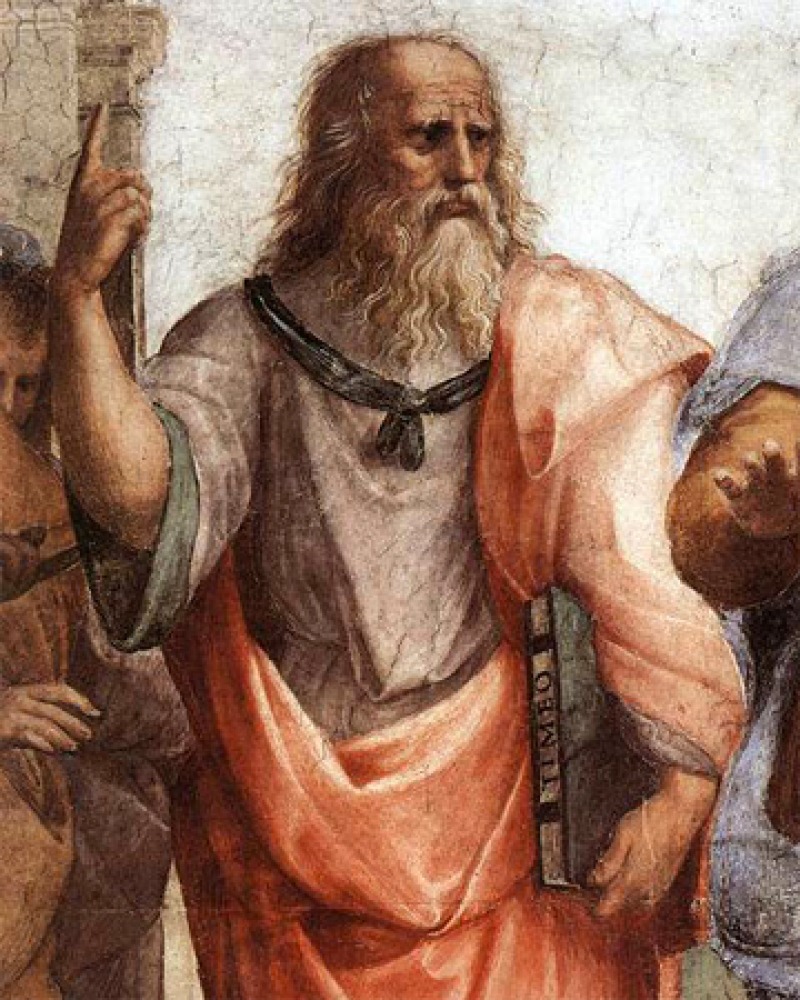
The second thing that must be understood before we get to the nuts and bolts of the classical theory is how extensively Plato, particularly his theory of forms, influenced the early Greek fathers.   Christianity made its appearance in Greece at a time when platonic thought was widespread and influential.  Plato was sort of the Isaac Newton or Albert Einstein of his day, the acknowledged brightest intellectual star of the time.  So, Plato ended up influencing a lot of early Christian thought.  In fact, it might be an interesting exercise to take a look at how the preaching of a first century itinerant Jew from Palestine got recast in the second century to look suspiciously like the ideas of the aristocratic Greek scholar.

According to Plato, reality consists of two realms:  there is the physical world, the world that we can observe with our five senses; and there is a world made of eternal perfect “forms” or “ideas.”

In his Socratic dialogues, Plato argues through the words of Socrates that because the material world is changeable it is also unreliable. But Plato also believed that this is not the whole story. Behind this unreliable world of appearances is a world of permanence and reliability. Plato calls this more real (because permanent) world, the world of ‘Forms’ or ‘Ideas’. 

Plato says that forms are perfect templates that exist outside our world of experience.  These forms are the ultimate reference points for all objects we observe in the physical world.  There are forms both of the qualities or properties of objects and their classification:  “We distinguish between the many particular things which we call beautiful or good, and absolute beauty and goodness.  Similarly with all other collections of things, we say there is corresponding to each set a single, unique Form which we call an ‘absolute’ reality.” (Plato, The Republic)

The objects of this world participate or, as Plato says, “share in” the forms. If something is beautiful, for instance, what makes it so is “the presence of,” or its sharing in, “the Beautiful.”  As Plato says through the words of Socrates, “all beautiful things are beautiful by the Beautiful.”  Similarly, objects also “share in” the form of their collection.  An individual horse is classified as a horse because it participates in the form “horse.”   (Antisthenes, the Greek Cynic, once told Plato, "A horse I see, but not horseness."  Plato reportedly replied, “That is because you have eyes but no intelligence.”)

If this all sounds a little crazy to you, think about it in terms of mathematics, which is how Plato thought of it – having been heavily influenced by Pythagoras.  

Math is full of ideas that have no existence in the real world, yet it explains so much of how the world works.  The number five, for example, does not exist in the physical world, except as a Sesame Street character.  The symbol for five exists, but the concept is only that – an idea.  It’s a form in which certain objects, like the fingers on one hand or the points on star pentagram participate.  Similarly, a circle – an infinite number of points equidistant a center point – is a concept that has no existence in the world of objects.  Real objects, however, like a ball, share in the characteristics of a circle.

Because mathematical concepts are so useful in explaining the world and seem to be universal and permanent, Plato thought of them as what was genuinely real and the objects that they explained to be only an imperfect and fleeting versions of an unchanging reality.  He simply expanded this idea to other attributes of objects found in the world.

I have one parting observation about Plato and how we think today.  Plato obviously put a lot of faith in human thought.  His argument in favor of the world of forms is based on his observation that we can conceive such perfect forms despite the fact that they don’t exist in our everyday experience.  So, because we possess a concept of beauty – we can think it and apply the concept to objects in the physical world – it must exist somehow, or else we could not know it. 

In the present day, we have lost this confidence in our own thinking.  Maybe it began with Galileo and his proof that the sun did not revolve around the earth, despite all appearances.  But certainly, with the emergence of quantum physics – where notions like the uncertainty principle or quantum entanglement resist human conception – any confidence that our own thinking can be counted on to reflect reality has been profoundly shaken.  How do we conceptualize a world in which, as physicist Niels Bohr tells us, “Everything we call real is made of things that cannot be regarded as real”?

The nineteenth century German philosopher Friedrich Nietzsche claimed that humans reduce the objective world to one that they can comprehend: “[man] wants to find some formulas so as to simplify the tremendous quantity of his experience.”  Nietzsche thus concludes, “Parmenides [and we can add Plato] said, ‘One cannot think of what is not.’ We are at the other extreme and say, ‘What can be thought of must certainly be a fiction.’”  We’ve come full circle.


Next:  Part 2 of the Patristic Theory

St. Anthony tormented by demons
Plato pointing upward arguing his theory of forms


Thursday, April 14, 2016

If It Seems Too Good To Be True, There Will Be a Law Suit

You will probably never read this in any Main Stream Media™ publication, but In Progress has never been afraid of the fringes frontiers of science and technology. As reported earlier, Rossi and Industrial Heat, the company that bought the licensing rights in the U.S. from Rossi for his E-Cat machine, have been testing a 1 mega watt version during the past year. The 352 day test is finished and the independent report has been completed. According to Rossi the report was so good that he has filed a suit against Industrial Heat for failure to live up to its obligations. You can get your "devil is in the details" of this miracle energy source here and here.

This is going to be a great, wild ride. It's too good for Main Stream Media™ to leave alone for much longer.

Monday, March 28, 2016

The Playlist

The Kingston Trio of the 80's:
(best when viewed full screen and full volume)

Wednesday, March 16, 2016

The Pedantry of Neil deGrasse Tyson or Someone Finally Awakens from Petty Science

This referenced essay is a bit over the top, but, if you understand it at all, it miraculously captures my dissatisfaction with Neil deGrasse Tyson and the scientific oobleck currently covering all thought. When Tyson first came on the scene, he seemed great! Recently, I haven't been able to figure out why he has become disturbing. This article articulates it all.

Wednesday, March 9, 2016

Lenten Break

Friday, March 4, 2016

The U.S. is not more criminal, just more lethal

I realize this is preaching to the choir, but there is a lot of information here. My emphasis for quite a while—that gun suicides should be our main focus in the gun debate—is well presented, as well as many other stats and sensible discussion points.
 

Sunday, February 28, 2016

It's Lent and Time for Another Blog Series: Theories of Atonement I

Introduction


It is doubtful that the Hungarian-born chemist turned-economist-and-philosopher Michael Polanyi ever met James P. Carse, former Director of New York University’s Religious Studies Program. And, as far as I know, neither individual had any knowledge of the other’s work (although it is certainly possible that Carse could have read Polanyi without mentioning him). Yet, both thinkers reached similar and, to many, surprising ideas about religion.

Polanyi’s focus in much of his writing was on the process of scientific investigation and discovery. In his book, The Tacit Dimension (1967), he claims that, although the scientist often works within certain models and theories seeking to refute or validate them, imbedded in his scientific outlook is “the conviction that there is something there to be discovered.” That is, there is something outside his known reality “which he is seeking to apprehend.” The identification of a problem in current scientific understanding is itself a realization that there is “something else” that we don’t know: “To see a problem is to see something that is hidden.  It is to have an intimation of the coherence of hitherto not comprehended particulars.” And so, while much of science is devoted to examining current understandings, there is always within the scientist the impulse to break out of this structure and bring to light undiscovered aspects of reality.

The scientist’s recognition of problems – his dissatisfaction with the current scientific framework – and his intimations of discovery drive him to study the issues that stir his unease. Such anticipations sustain the researcher in the demanding work typically involved in making a breakthrough.  Indeed, Polanyi calls what lies behind the drive for scientific exploration as “intellectual passions.” And, sometimes those passions are rewarded. Polanyi in his book, Personal Knowledge: Towards a Post-Critical Philosophy (1958), speaks of the “overwhelming elation felt by scientists at the moment of discovery, an elation of a kind which only a scientist can feel and which science alone can evoke in him.” Indeed, “[t]he affirmation of a great scientific theory is in part an expression of delight. The theory has an inarticulate component acclaiming its beauty, and this is essential to the belief that the theory is true.” Polanyi quotes Johannes Kepler’s exclamation at his discovery of his Third Law: "nothing holds me; I will indulge my sacred fury."

Polanyi contends that the same impassioned impulse to search beyond the known that drives the scientist also propels the religious believer. Again, in Personal Knowledge, Polanyi says that, like the scientist, the believer is “guided by the intimations of discoveries still beyond our [human] horizon” as he “strives to break though the accepted frameworks of thought.” Indeed, Polanyi calls religious worship “a framework of clues which are apt to induce a passionate search for God.”

But, according to Polanyi, unlike the scientist, the unfortunate believer can never experience the joy of discovery and resolution of the problem because religious issues cannot be finally solved. In Personal Knowledge, he calls religion “a continued attempt at breaking out, at casting off the condition of man, even while humbly acknowledging its inescapability.” As Polanyi later says in his book, Meanings (1976), written with philosopher Harry Prosch, “we may not feel better, or be ‘better off,’ if we embrace religion. We may instead reap suffering, struggle, and sacrifice.”

So, religion, and Christianity in particular, cannot be enjoyed the way science can. Instead, the believer lives in a continual sense of tension and anguish as reinforced by the ritual of worship. Says Polanyi, “[Religious] worship sustains as it were, an eternal, never to be consummated hunch: a heuristic vision which is accepted for the sake of its unresolvable tension.” Indeed, “[i]t is like an obsession with a problem known to be insoluble, which yet follows, against reason, unswervingly, the heuristic command: 'look at the unknown!' ”

In his book, The Religious Case Against Belief, James Carse ends up saying much the same thing about religion but from a different perspective. As an initial matter, Carse is fascinated with the longevity of religions. He says that no institution or human association of any kind – empires, governments, ideologies or cultures – has lasted as long as the great religions. Hinduism has lasted over four millennia; Judaism for almost three millennia. Buddhism has lasted 25 centuries, Christianity over 20 centuries and Islam 14 centuries.

Carse says that the other thing that distinguishes religions from other schools of thought is the inability of their followers to come to agreement on what they believe. Carse says, “the religions themselves have never succeeded in coming to a final agreement on the quest.” Rather, “[y]ou begin your inquiries and you find that as you get deeper and deeper in your studies, the questions get larger and larger. If people come to religion authentically, they find their questions not answered but expanded.”

Religions have an identity, says Carse, but they have little and only temporary consensus on their beliefs. He sees religion as an ongoing dialogue rather than a set of dogmas: “what religions do have is a pressing desire for talk.” He adds, “these conversations can become exceedingly rich and complicated, requiring long preparation for entering into them….” It is the lack of any final answers, says Carse, that has kept religions alive for so long – the faithful feel that they must continue the discussion. He compares religious texts to Oedipus Rex by Sophocles: “If we could agree on what Oedipus Rex is about we could focus on the agreement and ignore the play.” As with Sophocles’ play, as long as the debates continue, we cannot ignore the religious tradition itself.

As an example, Carse takes the person of Jesus himself and spends some 20 pages discussing the various – sometimes compatible and sometimes incompatible – pictures and ideas about Jesus that have arisen throughout the history of Christianity. I share with you a very abbreviated summary of Carse’s complicated history. He begins with the New Testament itself and shows how the four Gospels present differing views of Jesus that also differ from what St. Paul had to say about him. Carse calls the New Testament a “glorious confusion.”

Carse then moves on to Irenaeus, bishop of Lyons, who described Jesus’ life as a recapitulation of Adam’s life in which Jesus reversed all the effects of Adam’s mistakes. Next is St. Augustine of Hippo, who established the notion of the incarnation – that Jesus was of two natures, fully divine and human. Carse discusses St. Anselm, who presents a Jesus unrecognizable to either Irenaeus or Augustine. St. Anselm argued that by logic alone it is clear that the incarnation was necessary.

Then, Carse turns to St. Thomas Aquinas and his development of the theology of the sacraments: that the key to understanding Jesus was that he established the Church and the Sacraments. But, then a few centuries later, Martin Luther and John Calvin come along and say that, not only is the Church and sacraments not the path to salvation, but that the Church is an impediment to Salvation.


Carse then describes the enlightenment take on Jesus. The German thinker Gotthold Ephraim Lessing asked this basic question: given the unreliability of historical evidence, how can we cross “the broad, ugly ditch of history” to prove the eternal fact that Jesus was God. Kant described Jesus as an example of perfect morality. Our own Thomas Jefferson follows up this idea by re-writing the gospels without any hint of Jesus’ divinity: The Life and Morals of Jesus of Nazareth. For Hegel, Jesus was part of a vast scheme in which God alienated itself from itself so that it could reconcile itself as a perfect unity. Kierkegaard said that Jesus was the “absolute paradox” that could not be understood intellectually, a view at odds with both the logic of Anselm and Hegel.

Carse concludes with a two-page laundry list of more contemporary views of Jesus. Again, I give just a sample: “a pure-blooded and exemplary Aryan, first member of the Master Race” (Nazism), “a messiah who magically transports himself to the Americas after his resurrection in Jerusalem” (Book of Mormon), “a paragon of efficient business discipline, a master advertiser” and founder of the modern corporation (The Man Nobody Knows by Bruce Barton); a “Jewish peasant Cynic” (John Dominic Crossan), a revolutionary who confronts repressive capitalist culture (Liberation Theology). Other descriptions include Roman spy, Pharisee, extraordinary athlete, member of the Essene cult, and avatar of Krishna. Again, I only touch upon Carse’s more extensive list.


This is all by way of illustrating that religion is a passionate pursuit of questions for which it is unable to find final answers. For all the discussion about Jesus, Christianity still debates who he was and what was his significance. As Carse says, “[t]here is something about the man that is yet to be known, something unresolved, but something that must be resolved.” Carse points out the similar centuries-long debates that persist in Islam and Buddhism. This ongoing conversation, says Carse, is the source of religion’s vitality and longevity. The debate itself fuels the passion for religion. Here, we hear echoes of Polanyi: Religion “is like an obsession with a problem known to be insoluble, which yet follows, against reason, unswervingly, the heuristic command: ‘look at the unknown!’”

The question of the nature of Jesus was not the only debate over the long history of Christianity. There is another puzzle at the very heart of Christianity that was never satisfactorily explained to me in the 12 years of weekly Sunday school I attended or in the theology courses I took at a Catholic university. Here is the puzzle. We were all taught that Jesus died for our sins, and that all humankind was saved by his death and resurrection. As Tertullian says, “it was for this purpose that he came – to die for sinners." But, what exactly was the salvation that Jesus brought – what were we saved from, and how did His death and resurrection achieve this?


The various attempts by thinkers and church leaders to answer these questions are referred to as the theories of atonement. As with the identity of Jesus, numerous theories of atonement have been proposed and discussed over the history of Christianity, and the debate continues. After 2 thousand years, we have been as yet unable to resolve the meaning of this basic Christian tenet.


God willing and the creek don’t rise, this post will be the first of a series that will discuss a select number of theories of atonement that have been offered by various Christian writers.


As Jim once offered the top ten definitions of God, I will offer the top five theories of atonement. 


Stay tuned.


Michael Polanyi

James Carse


Next Post: Theories of Atonement II (Classical or Patristic Theory – Part 1)

Sunday, February 21, 2016

For Mike

Let's try the American way. (No, not the usual underhanded, strong-arm, terroristic CIA way, but terribly crippled democracy.)

Thursday, February 11, 2016