Thursday, November 19, 2015

It's Science - Fitter legs means fitter brains

I guess this belongs in the category, "We knew it all along."
Researchers at King's College London have found that muscle fitness as measured by power in the legs is strongly associated with an improved rate of ageing in the brain. 
Scientists studied a sample of 324 healthy female twins from the TwinsUK volunteer registry over a ten-year period from 1999, measuring various health and lifestyle predictors. Researchers were, therefore, able to control for genetic factors affecting changes in cognitive function. 
Thinking, learning and memory were measured at both the beginning and end of the study and it was found that leg power was a better predictor of cognitive change than any other lifestyle factors tested. Generally, the twin who had more leg power at the start of the study sustained their cognition better and had fewer brain changes associated with ageing measured after ten years.
 Here's the article, and you can pat yourself on the back, you smarty.

Wednesday, November 18, 2015

Fiction + Time = Fact

Maryland state wildlife workers used an electric hand saw to remove a milk can that was stuck on the head of a bear.
Department of Natural Resources spokeswoman Karis King says the wildlife response team was called early Monday to a rural location near Thurmont to rescue an adult male black bear with his head stuck inside a metal milk can.
The workers speculated that bear had probably found a picture book in the garbage but couldn't read.


Tuesday, November 17, 2015

Kierkegaard: Every movement of infinity comes about by passion


Recently, I saw the movie Chef.  While I’m not sure if it was a truly great movie, I thought that it was good enough and certainly enjoyable to watch.  Jon Favreau, best known for directing Elf, Iron Man and Iron Man II, starred, wrote, produced and directed it.  While I don’t want to give anything away, as the title suggests, the movie is about a chef.  You’ll find that this is was one of those food films – like Big Night, Babette’s Feast or Eat Dink Man Woman – in which, as the movie continues, you just get hungrier and hungrier.  To give everything the right feel, Favreau brought in Roy Choi, famous chief and Korean taco truck magnate, as a culinary consultant.  And the movie had at least one great scene – one that most people probably missed, unfortunately (spoiler alert).

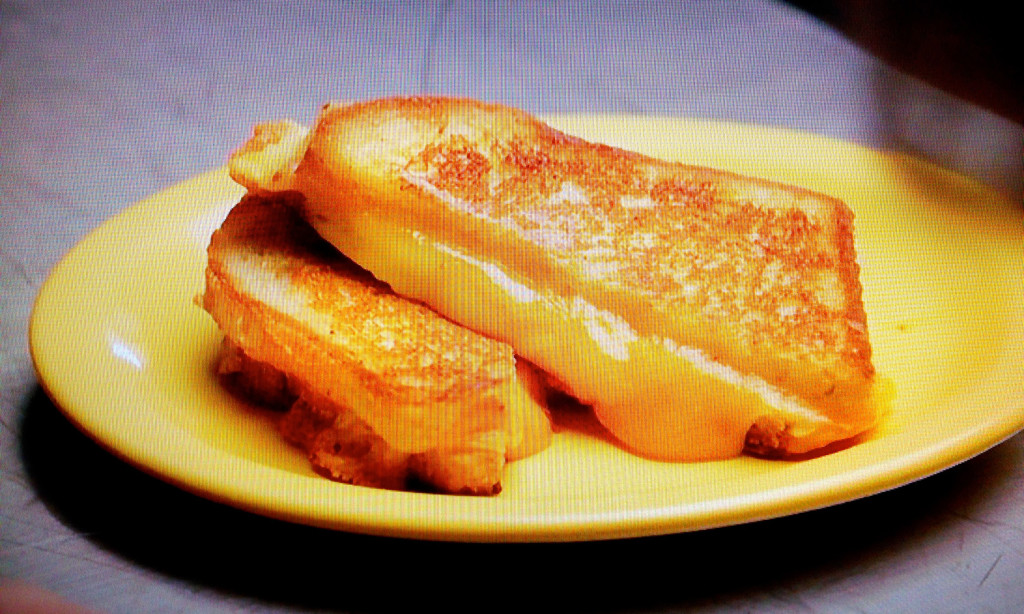
At the ending of the credits, long after the movie proper has ended, there is a short clip – not related to the movie’s story – in which Choi is showing Favreau how to make a grilled cheese sandwich.  Choi performs a veritable ballet here, moving around the griddle, swirling the sandwich in the oil, constantly checking the bread for doneness from every angle.  As Choi is engaged in all this activity, he explains:
So you can see the whole sandwich is starting to evolve.
See the cheese is starting to evolve, too.
You’re almost…
Even now as you get further, Jon, you're getting in, like, a surgeon. 
You're changing even your grips here. 
Changing your positions, moving around. 
But you're not too busy with it. 
You're precise, but then sometimes you step back. 
Nothing else exists except this. 
This is the only thing that exists in this world right now. 

And if you f-ck this up, everything sucks in the world.


Favreau and Choi
cheese sandwich -- nothing else exists

Friday, November 13, 2015

Covert Military Action

The first attempt to try an interactive poll on the site proved technically successful. Unfortunately it didn't garner more than a handful of votes (I voted 4 times.) Perhaps a more serious topic will stir up interest. (This time you can only vote once.)

Each vote will probably need explanation. The comments should be used for that.


Wednesday, November 11, 2015

Tattoos are so 2nd Millennium

Step back piercers, the cyborg society is on the way with Pittsburgh at the forefront. While some are considering the Apple wristwatch, Grindhouse Wetware, a Pittsburgh company, asks you to consider the wrist. "Hopefully we'll have a lot of guinea pigs in the body modification community soon."
[Warning: linked article has some graphic surgical images.]

Sunday, November 8, 2015

Answer to the Two-Minute Mystery -- Or Not!

I think that enough time has elapsed for anyone interested to give his or her response to the Two-Minute Mystery. Jim was right to focus on the bird building the nest. Only, the problem wasn't with the bird but with the tree. Here is the wealthy Mrs. Sydney's complete answer as printed in the paper (I had to turn my desktop screen upside down to read it): "Although an experienced bird watcher, Roach didn't know his tropical flora. Obviously, he didn't watch a bird building a nest in a palm tree as he claimed. Palm trees have no branches, only long slippery fronds; and birds can't perch -- much less nest on them."

The more accurate answer, however, is a bit more complicated, which explains why Dr. Haledjian was stumped. It turns out that Mrs. Sydney may know her flora but she doesn't know birds. Even though palm trees do not have branches, certain resourceful birds do in fact build their nests in palm trees.

Here are the nests of the Weaver bird, clearly built in palm trees. As you can see from the second photo, they can be orange in color. Most are from Sub-Saharan Africa, with fewer species in tropical Asia.


Closer to home, the orange hooded oriole also builds nests in palm trees. According to the Audubon Society, while the hooded oriole will nest in various trees, it "[e]specially favors palm trees, and will nest in isolated groups of palms even in cities."

Now, the fact of the matter is that I couldn't find an orange bird from the Florida Keys that builds its nests in palm trees during the month of January (the hooded oriole spends its time in the Southwest US and Mexico). It may be that, given sufficient time and effort, I might discover a bird that fits that description. But, even so, Mrs. Sydney's contention was that it was physically impossible for a bird to build a nest in a palm tree, not that there are no orange birds in Florida that might build a nest there. And, Roach said that he spied an exotic orange bird, belonging to a species new to him. Perhaps a hooded oriole had lost its way, or Roach discovered a new species. In any event, Roach's story is not so implausible as to totally discredit him. Under these circumstances, no wonder Dr. Haledjian was stumped. His reputation as one of the world's greatest detectives without question remains intact.

Saturday, November 7, 2015

Modern Health Care Questions Its Own Value

Perhaps modern health care may not have all the value we ascribe to it.

…we have compared lifespan in the Old Order Amish (OOA), a population with historically low use of medical care, with that of Caucasian participants from the Framingham Heart Study (FHS), focusing on individuals who have reached at least age 30 years. 
Analyses were based on 2,108 OOA individuals from the Lancaster County, PA community born between 1890 and 1921 and 5,079 FHS participants born approximately the same time. Vital status was ascertained on 96.9% of the OOA cohort through 2011 and through systematic follow-up of the FHS cohort. The lifespan part of the study included an enlargement of the Anabaptist Genealogy Database to 539,822 individuals, which will be of use in other studies of the Amish. Mortality comparisons revealed that OOA men experienced better longevity and OOA women comparable longevity than their FHS counterparts.

The study speculates that lifestyle may predispose longer life. (The study is here.)

Friday, November 6, 2015

One In the Plus Column for Nonbelievers

I may have to re-think my view of religion:  Religious upbringing associated with less altruism, study finds.


Serial - Season 2

For "Serial" devotees, season 2 will unfold sometime this month—new season, new subject, new controversies. Sarah Koenig said as much in a Glamour article. Also new this season, the series will be broadcast on Pandora as well as podcast on the Serial site.

While you're waiting you may want to try a completely different type of mystery podcast, called, appropriately enough, "Mystery Show". Starlee Kind, of This American Life, is the creator and host. I found the episodes a bit uneven, but entertaining in a richly quirky way, especially if you like solving lighthearted mysteries. They can be found here.

Tuesday, November 3, 2015

Sydney J. Harris and Dr. Haledjian

When I was growing up, I didn’t read much newsprint – even though on most days we received two papers.  But I didn’t ignore the newspaper altogether.  During baseball season, for example, brother Pete and I would daily pour over the sports section, reading the account of last night’s game and carefully studying every statistic and listing available.  And, of course, I read the comics.

There were two other features in the Post-Gazette that I distinctly remember from childhood.  These were:  a feature called “Two-Minute Mystery,” and the Sydney J. Harris column, "Strictly Personal.”

If I remember correctly, Two-Minute Mysteries appeared only during the summer, at least in the Post-Gazette.  It was a short column that spun a mystery story and gave the reader the chance to solve it – presumably in two minutes.  Donald J. Sobol authored the column and it was syndicated through the Associated Press.  It first appeared in 1959 and lasted until 1968.   Best of all, it starred the famous sleuth and criminologist, Dr. Haledjian.

I remember that there was always a group of us at home who would grab the paper for Sobol’s column and set our minds upon finding the solution.  And woe unto him who disclosed the answer before we had a chance to read it.  Inevitably, there would be a discussion comparing our guesses to each others and Sobol’s “correct” answer (printed upside-down below the column), and what we thought of the quality of that day’s installment.  It tended to be a competition of sorts – like everything else we did – to see who could solve the mystery.  Unfortunately, I was never very good at it and, as often happened in matters of this sort, I took a backseat to Dad and my older brothers.

Of course, the quality of the column varied, and some were impossible, requiring some specialized knowledge, for example, that muscles swell immediately after exercise.  And some – well – just didn’t make much sense.  In one mystery, an English professor's suicide note is considered fraudulent and a product of foul play because it contained a split infinitive.  Sobol in his solution naturally assumed that, because (1) English professors always follow grammatical rules, even when distraught and suicidal, and (2) that all English professors accept that “don't split infinitives in English” is such a rule, it must have been murder.  If anything, however, the often-strained logic only made it more fun and I found myself eagerly waiting for the next day’s installment. 

Anyway, here is one mystery that even the brilliant Dr. Haledjian couldn’t solve.  Answers can be written in the comments.
For years Mrs. Sydney, the wealthiest dowager in New York City, had vainly tried to outwit Dr. Haledjian.  As the famous criminologist selected a cigar from the tray held by the Sydney butler, a wicked gleam came into his hostess' eye.  It was time for playing stump-the-detective....”  John DeMott, Paul Houk, and Lee Roach were partners in a successful New York jewelry business," began Mrs. Sydney.  "Last January they flew down to the Florida Keys to spend a month at DeMott's lodge."  One afternoon DeMott took Houk, an avid fisherman but a non-swimmer, out on his forty-foot cruiser.  Roach, whose hobby was bird watching, remained behind. "Roach says he was sitting behind the lodge when he spied an exotic orange bird, belonnging to a species new to him, fly by. He followed it to the front of the house, and through binoculars watched it building a nest, high in a palm tree."  Quite by chance, he moved the binoculars out to the water and saw DeMott and Houk struggling on the yacht.  Roach says DeMott shoved Houk over-board and held his head under water.  "DeMott claimed that Houk had leaned over the side to gaff a fish, and, losing his balance, fell into the ocean.  He drowned before DeMott could reach him."  The coroner ascribed death to drowning.  At the trial, it was simply DeMott's word against Roach's.  "The jury deliberated less than five minutes," concluded Mrs. Sydney. "No doubt, my dear doctor, you won't need so long to realize who was lying."  Haledjian didn't.  Do you?


The other column I remember from the Post-Gazette of my childhood was Sydney J. Harris’ “Strictly Personal.”  Mostly, the column was Harris’ ruminations about pretty much anything that was on his mind, and it was more philosophical than political.  I’m not sure that anything like it exists today in newsprint, with the possible exception of the New York Times’ column “The Stone” that, according to the Times, “features the writing of contemporary philosophers and other thinkers on issues both timely and timeless.”  But, Harris was much less abstract and ponderous than most of what I read in the Times column.

He also had a curious occasional feature titled, "Things I Learned En Route to Looking Up Other Things,” in which he simply listed odd facts he had picked up along the way.  The facts listed could not be more random:  A few examples:
  • If a cat died in ancient Egypt, family members were required to shave off their eyebrows as a sign of mourning.  (And citizens were not infrequently executed for the ‘crime’ of killing a cat.) 
  • No king of Sweden for 100 years in the 17th century could speak the language of the country (since the time of Charles II in 1697 to the reign of Gustavus in 1792). 
  • “Fascism” as a political term was adopted by Mussolini from one of the Aesop’s fables showing that, while sticks could be easily broken one by one, they were irrefrangible if tied together in a bundle. (the Latin word for a bundle of sticks was fasces, which were brandished by the lictors of ancient Rome as symbols of authority.)  
  • The will Stephen Girard, endowing Girard College (for orphan boys) in Philadelphia, expressly prohibited clergymen from coming onto the premises of the school.
I don’t so much remember reading the column myself as much as I remember Dad reading it.  He was a big fan of Harris and, as far as I can recall, read the column at every opportunity.  He often would comment on it over breakfast or read sections to anyone who would listen.  I seem to recall that not everyone shared Dad’s high opinion of Harris, and that there was sometimes discussion on this point.  

I suppose that Dad liked Harris for the same reason that he was fond of G.K Chesterton:  Harris was clever, usually in support of a worthy cause, and he was profound without being obscure.  Harris may have also resonated with Dad because they were within months of the same age.  And, Dad was not Harris’ only fan.  In his day, Harris was immensely popular.  Time magazine once called Harris “the most quoted newsman in Chicago.  

Harris was born in London.  At five, his family moved to Chicago and he remained there the rest of his life.  He was a classmate and life-long friend of Saul Bellow.  Harris studied philosophy at the University of Chicago, and worked for several Chicago papers. In 1944, he began publishing “Strictly Personal,” which he continued to write for the next 40 years.  At some point his column was nationally syndicated, which is how it ended up in the Post-Gazette.

Despite having once written that “quotes are a way to lazy wisdom,” Harris was a master of the well-constructed sentence and could pack profound ideas into just a few words. Essayist, critic and editor Clifton Fadiman once referred to Harris as “America’s finest living aphorist.”  So, now he is remembered for these kernels of wit and wisdom.  Again, I provide a sample:
We have not passed that subtle line between childhood and adulthood until we move from the passive voice to the active voice — that is, until we have stopped saying “It got lost,” and say, “I lost it.”
Everyone admits that "the truth hurts" but no one applies this adage to himself — and as soon as it begins to hurt us, we quickly repudiate it and call it a lie.
Ninety percent of what we believe has nothing to do with the process of thought, but comes instead from the four sources of family inheritance, individual temperament, national culture, and economic self-interest; and while we cannot wholly cast off these shackles, we should at least recognize their cramping and distorting influence upon the free process of thought.
What we are looking for, I am afraid, is neither a true leader nor a true Messiah, but a false Messiah - a man who will give us over-simplified answers, who will justify our ways, who will castigate our enemies, who will vindicate our selfishness as a way of life and make us comfortable within our prejudices and preconceptions.
Terrorism is what we call the violence of the weak, and we condemn it; war is what we call the violence of the strong, and we glorify it.
The primary purpose of a liberal education is to make one's mind a pleasant place in which to spend one's leisure.
Intolerance is the most socially acceptable form of egotism, for it permits us to assume superiority without personal boasting. 
It's odd that the people who worry whether certain plays are "morally offensive" so rarely worry about the moral offensiveness of war, poverty, bigotry.
Our dilemma is that we hate change and love it at the same time; what we really want is for things to remain the same but get better.
Any philosophy that can be put in a nutshell belongs there.  (This is a corollary to Richard Feynman’s line “Hell, if I could explain it to the average person, it wouldn't have been worth the Nobel prize.”)
Who could blame Dad for liking Harris so much?

Sydney J. Harris


Sunday, November 1, 2015

In praise of and personal reflection on “It’s been a Long Time Coming”

“The Decadence of Halloween” from 1876 was a delight to read. The classic nostalgia of a wistful past along with the lament of a predicted future captures multiple meanings when the subject is Halloween. I would guess everyone over 30 expresses, at one time or another, the same regret that something has been lost. Life, unlike physics, is time-directional dependent. Your kids and your neighbors’ kids will never experience the “olden times” that you did. Their memories will be unique, but to predict the departure of the “glory of this once popular festival“, and that “its triumphs and rough jollities, festivals, and strange rites” will disappear is risking ridicule when your statements are discovered 150 years later. 

Perhaps the author did not fully understand the strength of life’s basic needs even while we conform to civilized society—the eternal conflict of the intellect of atheism versus the awe and alienation of life. We need the constructs of abstraction, our ordering of nature. We have to feel we understand, if only in part, what is going on. But we also need to dance naked on the hills of rural Scotland or Ireland where the “rough old games so peculiar to the [Halloween] festival” play out.

The Higgs field helps us model reality for better understanding, but we realize it is just a model that fits our mental image of reality. It is hardly more real than the field of ghosts and goblins. The one helps our understanding, the other helps our mystification. Both give us perspective.

Myk’s post also gives me a chance to relate a new personal perspective on Halloween. This was my first Halloween in my new home in my new neighborhood. While I’m in the city of Pittsburgh, my neighborhood is uniquely isolated by its cobblestone entrances, one on each end, to develop a personality of its own. There were hundreds of very small children (accompanied by parents) roaming the street. (only a very slight exaggeration) It is a trick ‘r treaters dream. As Michael can testify—he came up for Halloween—pounds of bag-challenging candy can be accumulated very quickly. The houses are close together, and the terrain is flat. Where it is not flat the homeowners come outside, down to their driveways to hand out candy to the children—no steps to walk. In fact many of the adults come out of their homes on both sides of the street. To fit in with the rest of the neighborhood, I spent the two hours of official Halloween on my front porch, chatting with kids and neighbors. The weather certainly helped, but I couldn’t help to periodically smile and laugh at the sight of little kids fantastically dressed walking among the homes and homeowners, also outside participating in this gathering. Perhaps this was the way Halloween was celebrated in Scotland in the early 1800’s.

It's Been A Long Time Coming

Even back in 1876 people lamented the decline of Halloween, and its loss of scariness and authenticity.  The Decadence of Halloween.

Wednesday, October 28, 2015

This is a test

Monday, October 26, 2015

The downfall of Theranos -- Sorry Jim!

http://www.theverge.com/2015/10/25/9607804/walgreens-halts-expansion-of-theranos-blood-testing-centers


Wednesday, October 7, 2015

Summer Movie Report 2015

Here is my belated summer movie report for this year.  Sue and I saw six official summer movies. Without giving too much away, I give my basic reactions. 

Far from the Madding Crowd.  The performances were good, particularly the leads, Carey Mulligan and Matthias Schoenaerts.  Mulligan was much better suited for the Bathsheba Everdene role than Julie Christie who starred in the 1967 version. Still, I was a bit disappointed:  it wasn’t wrenching enough for a Hardy novel.   I might have liked it more had I not seen the truly excellent four-hour 1998 version produced by Granada Television and shown on Masterpiece Theater.


Mad Max: Fury Road.  This is an amazingly intense action movie.  At one point I found myself unconsciously raising my arms to ward off all the mayhem on screen.   That’s probably a first for me.  Charlize Theron steals the show.   I have a couple of complaints about the movie that prevent it from being my favorite movie of the summer, which we will leave unstated, since they would reveal too much about the movie.  As promised, no spoilers.   


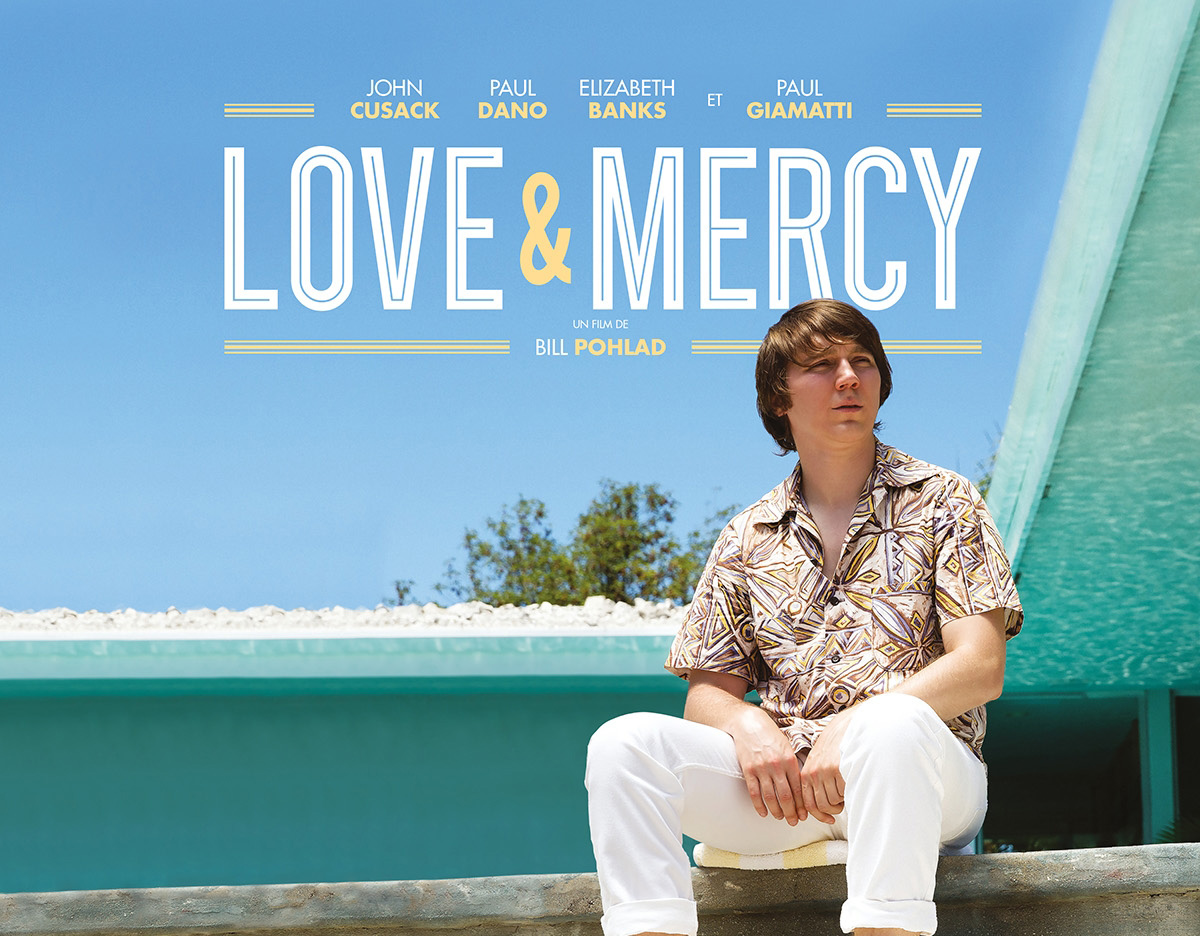
Love & Mercy.  This was my favorite movie of the summer.  This is the story of Brian Wilson – played by two actors – told with surprising accuracy.  It’s a pretty extraordinary story.  Plus, we have the Beach Boys soundtrack.   Without revealing details, I found the movie extremely enjoyable.


Inside Out.  This was the Pixar animated film with Amy Poehler.  It was a clever movie and there were some extremely touching scenes, but, given the fact that it came from the guy who gave us Monsters, Inc. and Up, I was a disappointed here as well.  Like its two predecessors, I was expecting this movie to hit the ball out of the park – and it just didn’t do it for me.  On the plus side, some schools are giving a partial psychology credit for watching the movie.


Amy.  This is the documentary on the life of Amy Winehouse.  I liked it well enough.  One of the great pleasures of the movie is that it allows you to see and hear what a great talent she was.  As you might guess, nobody looks good.


Mr. Holmes.  If I was disappointed by Far from the Madding Crowd and Inside Out, I was pleasantly surprised by Mr. Holmes.  Here, we see Holmes in his later years, and he faces issues that demand more than just observation and logic.  Ian McKellen was great as the aging Holmes. 


Overall, not a bad summer. 

Tuesday, September 1, 2015

Overused Evolution: A Response

I have finally managed to cobble together a response to Jim’s two posts on overused evolution.   I don’t address all his gripes, but I thought that a few observations were in order. 

First, to casually dismiss Darwin -- as Jim does – based on a claim that his ideas aren’t new – that the notion that species have changed over time is as old as the Greeks – is like saying Niels Bohr wasn’t so great because Democritus had already developed the theory of the atom in 400 BCE.   These early evolutionary theorists may have guessed at the fact that living things changed over time, but they had no idea how.   Here’s what the 3rd century Roman writer Censorinus said about Anaximander of Miletus, the guy who came up with the early Greek theory:   

Anaximander of Miletus considered that from warmed up water and earth emerged either fish or entirely fishlike animals. Inside these animals, men took form and embryos were held prisoners until puberty; only then, after these animals burst open, could men and women come out, now able to feed themselves.

I’d say that the theory of evolution still needed some work.  

What Darwin achieved that no one had done before, except for maybe Alfred Russel Wallace, was to figure out the mechanism for the change, namely the unique variations of every individual within a species and natural selection from those variations.   He added a few other important details, like the idea that all species are descended from a common ancestor, but natural selection is the big one.  "Up until 1859," said evolutionary biologist H Ernst Mayr, "all evolutionary proposals endorsed linear evolution, a teleological march toward greater perfection."  Darwin’s thinking changed all that.  

Biologist and geneticist Theodosius Dobzhansky entitled his 1973 essay "Nothing In Biology Makes Sense Except In The Light Of Evolution."  I think that most biologists would agree.  It’s hard to overestimate Darwin’s contribution.

But, I have another, more important quibble here.  Jim should not be blaming Darwin for his own irritation over the loose talk around the water cooler about natural selection.  In my view, Jim’s problems are more with the ultra-Darwinists, also known as the adaptationists, and, in particular, the evolutionary psychologists.

Right off the bat, we must be clear that Darwin was himself not an ultra-Darwinist.  He did not believe that every human trait was an adaptation determined by natural selection.  Here’s what he wrote in the last (1872) edition of The Origin of Species ten years before his death: 

But as my conclusions have lately been much misrepresented, and it has been stated that I attribute the modification of species exclusively to natural selection, I may be permitted to remark that in the first edition of this work, and subsequently, I placed in a most conspicuous position—namely, at the close of the Introduction—the following words: “I am convinced that natural selection has been the main but not the exclusive means of modification.” This has been of no avail. Great is the power of steady misrepresentation; but the history of science shows that fortunately this power does not long endure. 

Unfortunately for Darwin, the power of misrepresentation is even greater than he imagined, and people – Jim for one – still labor under it.  

Let us consider the real culprits, starting with the evolutionary psychologists.  They follow the adaptationist program, but they compound the errors with their focus on behavior.  As psychologist Christopher Ryan writes:  “Anyone who takes evolutionary psychology seriously has to overcome the fact that many of the most prominent voices in the field don't.”

As I understand it, the basic tenet of evolutionary psychology is that common human behaviors have developed the same way evolutionary psychologists believe that human all physical features developed:  as the result of genetic mutations – this time within the brain – that have been honed by natural selection to serve a particular purpose.   The proposal is that these behaviors were “selected” at the dawn of human existence because they provided a reproductive advantage to our Pleistocene ancestors.  Thus, ultimately, we must understand human behavior as a mechanism to give evolutionary advantage so that our genes can be passed to the next generation.

At bottom, the problem with this view is its willingness to leap to conclusions on seriously inadequate evidence.   It is almost laughably oversimplified for many reasons, and I just touch upon a few of them here.  

First, as Darwin correctly recognized, not every attribute or feature in an organism is the result of adaptation.  For biologists, adaptation has a technical meaning:  an adaptation is a feature produced by natural selection for its current function.   Today’s biologists tend to be cautious about labeling any trait as an adaptation.  They insist that a heavy burden of proof be met before a trait can be considered adaptive.  Indeed, there are several other possibilities.   Here are a few:
1.     A trait might reflect features of an ancestor of a species that are present in the species only due to developmental constraints. The fact that the first land vertebrates (tetrapods) had four limbs wasn’t an adaptation in itself; it was a consequence of their having evolved from four-limbed fishes.  This, by the way, answers Jim’s questions about why humans didn’t “evolve wings, or poison spittle, or a taste for stationary plants (vegans a million years ago), or a better sense of smell, or high frequency speech that would stun the game.”  Evolution must work with the materials at hand and, while there is debate over whether the evolutionary change is always constant, there is no doubt that it is always incremental.  (By the way, we did develop a taste for stationary plants – see discussion of plasticity below.) 
2.     A trait may be a by-product of another characteristic.   That mammals’ blood is a red color is not an adaptation.  Mammals with red blood do not manage to survive better than mammals with yellow or blue blood.  Our blood is red because it contains iron. Natural selection had a role in placing iron in the blood, since the iron enhances its oxygen-carrying capacity.  The resultant red color of the blood is not an adaptation; it’s merely a side effect.  The late paleontologist Stephen J. Gould used an architectural term, spandrels, to help describe these genetic side effects. 
3.     A trait may be an outdated adaptation, or a vestigial structure.  A vestigial structure is a feature that was an adaptation for the organism's ancestor, but that evolved to be non-functional because the organism's environment changed.  Scientists have hypothesized that the large, hard-shelled fruit of the calabash tree was actually an adaptation for seed distribution by large mammals. Unfortunately, these mammals went extinct over 10,000 years ago.  If the hypothesis is correct, these fruit characteristics were once adaptations for seed distribution but are no longer.   Another example:  the ostrich wing once an adaptation is no longer needed for its original purpose. 
4.     A trait may be an exaptation, a feature that performs a function but that was not produced by natural selection for its current use.  Feathers originally developed to control body temperature but later proved useful in flight.  
5.   Another feature of an organism that is not be an adaption is one that resulted from genetic drift.  This is perhaps the most common source of a trait that is not an adaptation, and is also the most difficult to explain.  Darwin did not recognize genetic drift because he knew nothing of the science of genetics.  But many biologists today believe that most of the variation found in evolutionary lineages is a product of random genetic drift and not adaptation.
Genetic drift involves gene variants, called alleles.   The most well known alleles are the variants for the two genes for eye color.  One eye color gene has two variations, brown and blue, as does the other gene -- green and blue.  Normally, since the variations are random, one would expect gene variation frequencies to remain constant from one generation to the next.   If, however, a population is limited in size, then the frequency of a gene variant will not be exactly reproduced in the next generation due to an insufficient sample.
You can make an analogy to flipping a coin.  The expectation is that heads will turn up 50% of the time because there are only two sides to a coin.  For the same reason, gene variant frequencies would be expected to remain constant from one generation to another.  But, if you flip a coin just a few times, heads may or may not turn up half the time.   In other words, when a sample is very small, the likelihood that the expected outcome will not occur is high.   The more times that you flip your coin, the more likely it will approach the expected 50% heads.  The same is occurs when a population is too small:  it becomes less likely that the gene variants will remain constant.
This process of random fluctuation continues generation after generation.   There is no force pushing the frequency back to its initial state – because the population has no "genetic memory" of its state in a previous generation. Each generation is an independent event.   Often, the final result of this random change in allele frequency is that the one variant is eliminated.  So, even in the absence of selective forces, genetic drift can cause two separate populations that began with the same genetic structure to drift apart into two divergent populations with different sets of alleles.   Most of the genetic changes caused by drift do not affect fitness and so are not eliminated by natural selection.

In any event, this failure to consider other sources for features in an organism is the first problem of the evolutionary psychologist. 

The second problem is the assumption that particular human behaviors are the result of genetic makeup.  Much of human behavior is learned and does not directly reflect genetics.  Necessarily, any behavior pattern that is not uniform across all cultures cannot be due to a genetically mandated adaptation.  Similarly, any behavior pattern that is not uniform across time from the emergence of Homo sapiens cannot be an adaptation.   Rarely does evolutionary psychology have the data sufficient to establish this kind of universality. 

Along these lines, the evolutionary psychologists ignore the concept of plasticity.   Plasticity is the ability of an organism to change its physical and behavioral characteristics in response to changes in its environment.  All living things can adjust to circumstances to some extent.  A highly specialized animal or plant with little plasticity lives only in a well-defined habitat, and cannot survive if its narrow needs are not met.  Many herbivores are like this; extreme examples are koalas that depend on eucalyptus, and pandas that require bamboo. A generalist with high plasticity, on the other hand, eats a range of food, and can change its eating habits to adjust to many different conditions. Examples are humans, rats and crabs.   Plasticity itself of course is an adaptation. 

It’s hard to dispute that flexibility is one of the defining characteristics of the human species. Humans inhabit an extraordinary range of environments and exhibit an extraordinarily wide range of behavior.   We are highly responsive to novel situations – we have been able to invent means of exploring outer space and the ocean depths, environments totally alien from the conditions in which we evolved.

Some of our flexibility is biological:  when we visit higher elevations, our bodies begin to produce more red blood cells that compensates for decreased oxygen levels, eventually allowing breathing and heart rate to return to normal.  Talk to Sean about living in Bogotá.   We can also adjust to a wide range of temperature and humidity.   Talk to Pete the Elder and Lisa about living in Senegal. 

We can also adjust our physical capabilities to our environment as a matter of choice.  You can be a 97-pound weakling at the mercy of the natural elements, or with some hard work you can be a tough Charles Atlas.  Jim in his post complained about the ineluctable conversation that at some point arises at almost every party – in which people bring up the early evolutionary development of the foot and the idea of “persistence hunting.”   While I appreciate how this could get tiresome, the fact is that endurance is an area of even greater plasticity among humans.  Nobody comes out of the box with the ability to run marathons, but physical plasticity allows us to alter the expression of these genes to increase endurance considerably.

When Ellen came home from school after her very first high school swim practice she was in tears – I exaggerate not one whit.  Between sobs she begged us not to make her continue on the swimming team.  Her complaint:  “the practice was so hard!”  She said she was shocked by the level of difficulty of the workouts and didn’t see how she could possibly endure them.  Well, for some reason she remained on the team, and was soon swimming between 5 and 6 miles every day at practice.  Few organisms have this degree of plasticity and none based on the strength of will of the individual organism.  If Ellen were thrown into an environment where she had to swim five miles a day to survive, given a little time, she no doubt would manage. 

But where humans show the most plasticity is in behavior.   Today, biologists understand that, rather than selecting humans for specialized behavior traits, human evolutionary history has selected behavioral plasticity or learning capacity.   

Data from the literature on learning shows overwhelmingly the powerful influence of the environment in shaping both human behavioral similarities and differences.  As the evolutionary biologist Douglas Futuyma put it:  “On balance, the evidence for the modifiability of human behavior is so great that genetic constraints on our behavior hardly seem to exist.  The dominant factor in recent human evolution has been the evolution of behavioral flexibility, the ability to learn and transmit culture.” 

And, finally, the third problem with evolutionary psychology: we really have no idea how our Pleistocene ancestors lived.  We can imagine how they might have lived, but basing conclusions on speculations about how certain behaviors might have provided an advantage to them, is hardly scientific. 

The arguments over evolutionary psychology and ultra-Darwinism get heated because there’s plenty at stake.  If human behaviors are largely adaptations selected by nature and mandated by our genes, then we in fact live in the best of all possible worlds.  Nothing can be done – and nothing ought to be done – to alter the hidden hand of natural selection and our genetic makeup.  But, if behaviors are the result of cultural influence or our own choices, then human behavior and conditions can be improved by altering culture. And so Scrooge pleads with the spirit at the end of “A Christmas Carol”:  “Tell me that is so by what you've shown me. …  Say that I may change these things... by an altered life.”

Gould and his co-author Richard C. Lewontin called the adaptionist program “Panglossian.” Master Pangloss in Voltaire’s Candide spells out the silly logic of the best of all possible worlds, and he sounds strikingly like the evolutionary psychologists:
  
Master Pangloss taught the metaphysico-theologo-cosmolonigology. He could prove to admiration that there is no effect without a cause; and, that in this best of all possible worlds, the Baron's castle was the most magnificent of all castles, and My Lady the best of all possible baronesses.

“It is demonstrable,” said he, “that things cannot be otherwise than as they are; for as all things have been created for some end, they must necessarily be created for the best end. Observe, for instance, the nose is formed for spectacles, therefore we wear spectacles. The legs are visibly designed for stockings, accordingly we wear stockings.  Stones were made to be hewn and to construct castles, therefore My Lord has a magnificent castle; for the greatest baron in the province ought to be the best lodged.

Like Master Pangloss, the ultra-Darwinists believe that all things are created for some end, indeed, the best end, and, therefore, things cannot be other than they are.  This is the sort of thinking that might have discouraged America’s founders from embarking on an experiment in democracy.

And not only that:  if human behaviors are genetic mandates, then humans must have always lived in the best of all possible worlds – as other species live.  

But we know that the past does not represent the best of all possible worlds, because we have improved upon it.   As various commentators have noted, there is significantly less violence and poverty in the world today.   Statistics reveal dramatic reductions in war deaths, family violence, racism, rape, murder and other sorts of violence.  Steven Pinker himself writes: "The decline of violence may be the most significant and least appreciated development in the history of our species."  Beyond that, people are better educated, better fed and less persecuted than in the past.  The role and political standing of women is changing throughout the world.  Humans live significantly longer and healthier lives.   Clearly, these things just don’t happen on their own.  Human action one way or another made these changes.  Things changed because human behavior changed.  

I suppose that the fact of human malleability and inventiveness was the point Michael Polanyi was trying to make when he said that, “Theories of evolution must provide for the creative acts which brought such theories into existence.”

Jim says in his blog entry, “I guess I’m not persuaded by these why-the-elephant-got-its-trunk stories.”  He’s not alone.  Gould called these speculations about how certain human traits came about as “just-so stories.”  Like Kipling’s efforts, the evolutionary psychologist simply invents seemingly plausible explanations for why we are the way we are with not much more evidentiary basis than the original stories.  That is, by proposing a mechanism for how some physical or behavioral trait could be adaptive, the evolutionary psychologist feels that he have fully explained its origins.

One of my favorite just-so stories is “How the Little Girl Came to Like the Color Pink.”  In 2007, Anya C. Hurlbert and Yazhu Ling of the Institute of Neuroscience and School of Biology and Psychology of Newcastle University, UK, published a study called “Biological components of sex differences in color preference.”  The researchers concluded that little girls’ preference for pink “arose from sex-specific functional specializations in the evolutionary division of labour.”   They reasoned that, as the gatherers in the hunter-gatherer society, female brains were specialized “to facilitate the identification of ripe, yellow fruit or edible red leaves embedded in green foliage.”  As a consequence, so the argument goes, little girls prefer pink.  

It’s a nice story, but it’s got more holes than a sieve.  First, we have zero evidence that only the distaff side of our prehistoric ancestors did all the gathering.  We just don’t know.  Second, preference is not the same thing as ability to distinguish.  Third, not all ripened fruit is red or yellow.  Dates, figs, olives and pears – all of which existed in the Pleistocene – are obviously not red or yellow.  Some berries are red, but many kinds are not.  Indeed, while almost all blue or black berries are edible, half of all red berries – such as the holly berry – are poisonous.

In addition, these color preferences are clearly a recent development and not an adaptation originating with the first humans.  In 1918, the Ladies' Home Journal wrote: "There has been a great diversity of opinion on the subject, but the generally accepted rule is pink for the boy and blue for the girl. The reason is that pink being a more decided and stronger colour is more suitable for the boy, while blue, which is more delicate and dainty, is prettier for the girl."  And then, the Sunday Sentinel in 1914 told American mothers: "If you like the colour note on the little one's garments, use pink for the boy and blue for the girl, if you are a follower of convention."  It wasn't until the 1940s that the modern gender associations of pink for girls became accepted in this country.  For the full story, see Pink and Blue: Telling the Boys from the Girls in America by Jo B. Paoletti.  So, it seems then that pink is not all that biologically girly.

My other favorite is “How the Human Male Got His Fist.”   According to University of Utah researchers Michael Morgan and David Carrier, hands evolved to punch faces, and faces evolved to take punches.   These researchers assumed that no sooner had Pleistocene males dropped out of the trees than they started whaling away at each other – mostly over women and food.  This is another a post hoc fallacy – because our hands can be effective weapons, then they must have evolved for that purpose.  

Again, the same problems emerge.  We don’t know how much our ancestors fought.  And we certainly don’t know whether they were pugilists (and did they follow the Marquess of Queensberry rules?), or whether they fought some other way, like scratching and gouging and rolling around in the mud.  Beyond that, the possibility that the ability to form a fist might by an evolutionary byproduct of a hand naturally selected for other reasons was not considered.  Again, this is just a story based on a lot of speculation.  As far as we know, the hand was no more designed by natural selection to punch people in the face than the nose was formed to hold spectacles.

As all this demonstrates, ultra-Darwinism is not good Darwinism.  

One final observation:  not only did Darwin’s theories differ from those of the latter-day Darwinists, he viewed his subject, nature and the world, entirely differently than they.

First, he did not believe that human existence was a war of all against all for the survival of only the fittest.   Indeed, he had quite a different vision:  “As man advances in civilization, and small tribes are united into larger communities, the simplest reason would tell each individual that he ought to extend his social instincts and sympathies to all members of the same nation, though personally unknown to him. This point being once reached, there is only an artificial barrier to prevent his sympathies extending to the men of all nations and races.”

As for his broader view of life, one might consider his famous final sentence of The Origin of Species.  Referring to his theory of evolution, he said:  “There is grandeur in this view of life, with its several powers, having been originally breathed into a few forms or into one; and that, whilst this planet has gone cycling on according to the fixed law of gravity, from so simple a beginning endless forms most beautiful and most wonderful have been, and are being, evolved.” 

Elsewhere, in one of his journals he echoes the same sentiment:  “Among the scenes which are deeply impressed on my mind, none exceed in sublimity the primeval forests undefaced by the hand of man; whether those of Brazil, where the powers of Life are predominant, or those of Tierra del Fuego, where Death and Decay prevail.  Both are temples filled with the varied productions of the God of Nature: no one can stand in these solitudes unmoved, and not feel that there is more in man than the mere breath of his body.”  Loren Eiseley in his essay, “Science and the Idea of the Holy,” says that, although Darwin was an agnostic, his writing expresses a “feeling of awe, of dread of the holy playing upon nature.” 

But, ultra-Darwinist Richard Dawkins sees things quite differently:  “The universe we observe has precisely the properties we should expect if there is, at bottom, no design, no purpose, no evil, no good, nothing but blind, pitiless indifference.”

Saturday, August 29, 2015

Oh Dear Reality

People love stability, so, even a hundred years later, there are those, even scientists, who still will not give up their faith in a causal, deterministic reality. Alas, at some point it becomes an irrational belief.

Tuesday, August 25, 2015

Get It Before It's Banned

Can't really decide on your next weapon of choice? Planning a barbecue? Want to give something special to that Republican friend? Have you considered a flamethrower?


They are totally cool and totally legal (except in Maryland. They must be registered in California.) Otherwise this weapon, forbidden by the Inhumane Weapons Convention (signed by the U.S. but that really only pertains to military use by our armed forces), is yours for the small price of $900. The absolute definition of awesome! As you can imagine, sales are as hot as the weapon itself.

Friday, August 21, 2015

A story of Prometheus as told by Aesop

The figure of Prometheus has remained popular in practically every period of (western) history from the 8th century BC on. Here is a lesser known tale told by Aesop:

Prometheus, that potter who gave shape to our new generation, decided one day to sculpt the form of Alethia (Veritas or Truth), using all his skill so that she would be able to regulate people's behavor. As he was working, an unexpected summons from mighty Zeus (Jupiter) called him away. Prometheus left cunning Dolus (Trickery) in charge of his workshop, Dolus had recently become one of the Prometheus’s apprentices.

Fired by ambition, Dolus used the time at his disposal to fashion with his sly fingers a figure of the same size and appearance as Alethia with identical features. When he had almost completed the piece, which was truly remarkable, he ran out of clay to use for her feet. The master returned, so Dolus quickly sat down in his seat, quaking with fear. Prometheus was amazed at the similarity of the two statues and wanted it to seem as if all the credit were due to his own skill. Therefore, he put both statues in the kiln and when they had been thoroughly baked, he infused them both with life: sacred Alethia (the spirit of Truth) walked with measured steps, while her unfinished twin, the forgery, stood stuck in her tracks.